 logo
logo
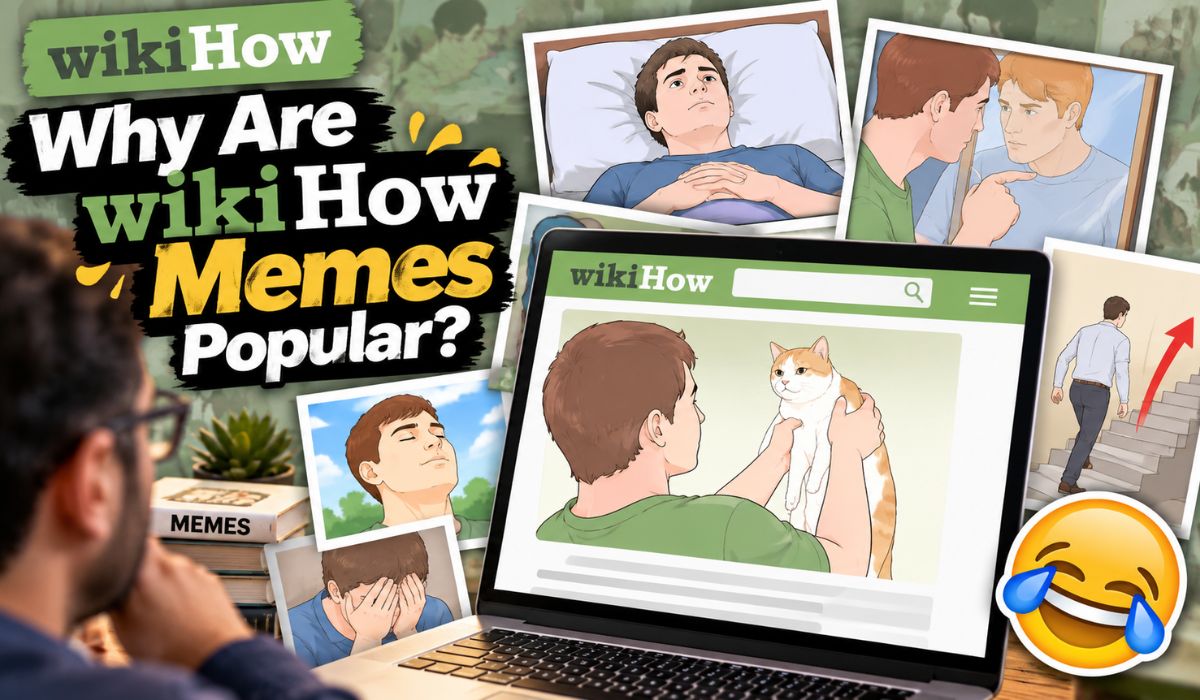
You’ve no doubt seen one of the weird pictures on the web that shows two people doing something awkward, confusing, and/or downright silly. A caption is added below it, and boom, now a picture that was once created for a regular how-to becomes a meme.
Many of those photos are courtesy of wikiHow. The odd thing is that the funny things usually didn’t make them funny when they appeared on wikiHow. Most of the illustrations were made to illustrate 1 step within an article, but when you take away the explanation the same image could look like something completely different.
That’s where wikiHow memes really took off. There are expressions, actions and weird situations already in the images, and the lack of context provides ample opportunity for people to create their own joke.
What is a wikiHow Meme?
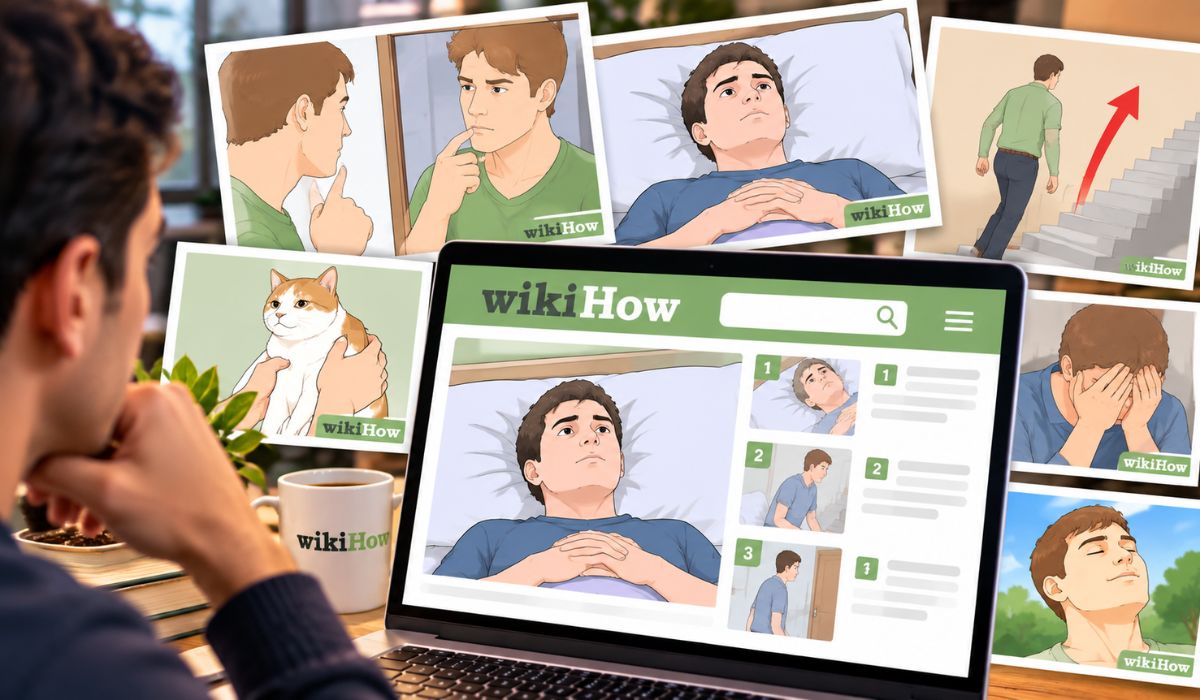 wikiHow has step-by-step instructions on a vast number of topics. In many of those articles, there are illustrations to help show what a person should do, where a thing should go or how a thing may be like.
A meme on wikiHow usually involves one of those pictures, and its application outside of the context of the wikiHow article. The creator can change the original explanation to something else entirely, or use the drawing as a reaction image, or pair it with a situation unrelated to the original guide.
An illustration might start out displaying a person getting away from an unpleasant social zone, for instance. Take out the real reason and the same picture can easily turn into a punch line for a quick leave of work, a blind eye turned at the sight of someone publically, or an argument avoided.
A major reason these pictures work is their flexibility.
The People’s History of the Civil War is a book of images, jokes, and anecdotes.
Many wikiHow drawings are understandable when read alongside the text. The article explains to you who these people are, what they are doing and why.
Remove that information and it’s not nearly as straightforward.
You might end up with an illustration that demonstrates:
- a person looking askance at another
- A person with a serious expression pointing at something.
- two people standing in an awkward position
- someone who is hiding or going away
- an ordinary object like it is extremely important to a person
The picture still depicts an obvious action; however, it’s no longer clear why the action is taking place. Your brain begins to fill in the blanks and meme captions exploit that.
What may seem like a perfectly fine drawing in a guide might turn into a mess when someone posts it on its own.
It can be the same photo, but with different captions, and they’ll mean almost anything.
WikiHow memes have another great source of their widespread propagation: the photos are often vague enough to allow for multiple jokes.
Think of a line drawing in which a person is closing a laptop computer after viewing something on the screen. One individual might make it a joke regarding reading a work e-mail. The very same photo might get used for school, shopping online or by someone to open something awkward.
The image will need to stay exactly the same. Only the caption is different.
That provides wikiHow memes with something many meme formats don’t have. The meaning may not be the same but is dependent on the person using it.
This also makes the format easy to access. No advanced editing skills or complicated template is required. Most of the work is down in finding the right picture and thinking of a funny caption.
wikiHow has a serious approach to everything, and that makes it funny.
wikiHow’s teaching style is very simple. In most articles the illustrations are treated in a serious manner, whether the subject is something common or a very peculiar social condition.
The enduring seriousness of that image becomes humor once it is transformed into a meme.
When a cartoon is clearly attempting to be funny, you know that it is going to have weird expressions and ridiculous situations. A wikiHow image is different, as the characters look like they’ve actually been part of an instruction manual.
You have this weird mix of the drawing is very, very serious, and the caption below it is very, very silly.
It’s a contrast that fits beautifully and, to be honest, some of the best wikiHow memes would probably be less amusing if the actual drawing were poking fun at itself.
There are already some pretty weird WikiHow Topics.
With wikiHow addressing so many questions, not every article is going to be about fixing some sink or learning how to cook something. There are some guides that address very particular relationship issues, uncommon circumstances or inquiries that most people would never envision to be a full depicted guideline.
In some cases, the actual name and image is already humorous.
You can see an illustration and think that someone must have altered the caption as there is no way that it could have been that way originally. Then you come across the actual article and discover that this meme isn’t all that different.
This is why wikiHow has 2 humor categories. Sometimes, people change the meaning of the image altogether and other times, it’s a joke to find out what the image was originally explaining.
r/disneyvacation Helped Turn WikiHow Images into a Meme Format
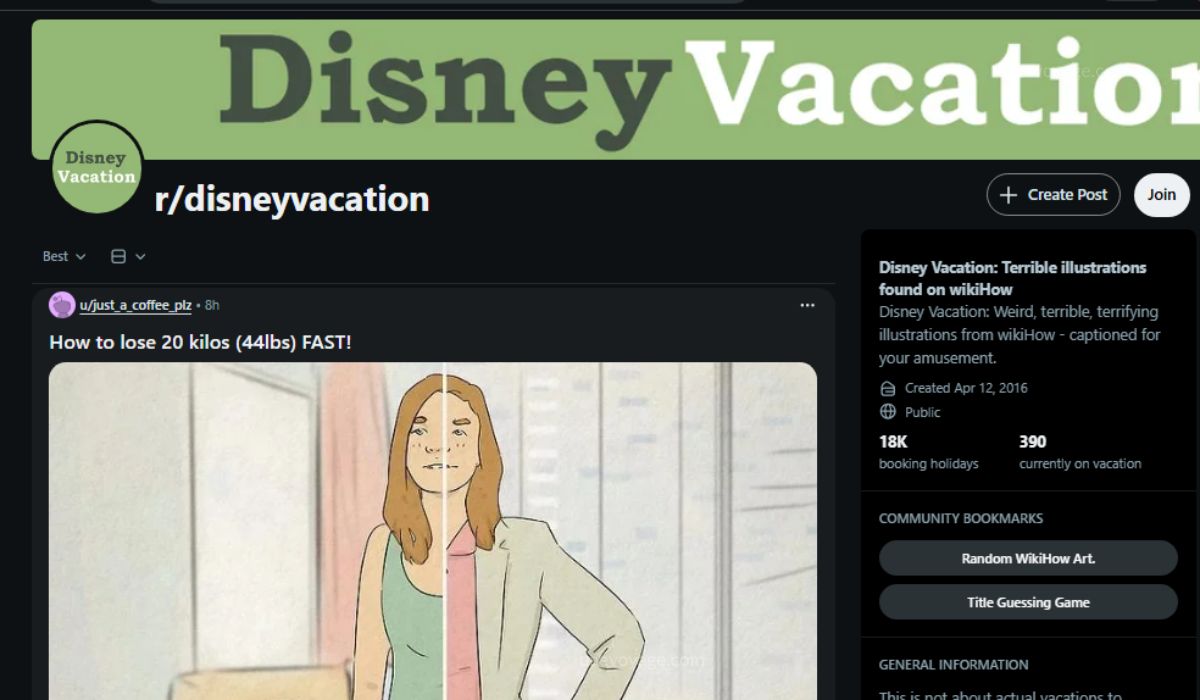 Reddit contributed significantly to providing these memes with their own distinct little culture to go with them. One of the most popular communities is r/disneyvacation in which users attempt to caption or title real wikiHow images with fake captions or titles.
The format is easy to understand:
- Find an unusual wikiHow illustration.
- Ignore its original meaning.
- Think of a completely different situation.
- Craft a caption for the new meaning.
That simplicity matters. It’s open for anyone to join in and each new wikiHow image provides people with another opportunity to do something different.
It also makes the entire exercise a small guess game. You don’t need to read the caption to start pondering what absurd situation the illustration might depict.
r/disneyvacation vs r/notdisneyvacation
Eventually it became so funny that another community arose doing almost the opposite.
| Community | User’s Posted Response | The Source of the Joke |
|---|---|---|
| r/disneyvacation | Real wikiHow illustration with a fake caption | Giving the picture a completely new meaning |
| r/notdisneyvacation | Real wikiHow image in its actual weird context | Real wikiHow image in its actual weird context |
Someone on r/disneyvacation takes the time to make the joke. The fun part is with r/notdisneyvacation and it’s that nobody needed to change anything.
That speaks volumes about wikiHow illustrations. There’s a fine line between satyr and the serious thing.
Why WikiHow Memes Do NOT Die
Most popular memes are associated with a single image, video clip or character. People re-use the same template over and over until everyone has had enough of the template.
wikiHow memes are unique in that the format is more important than any single image.
The fundamental concept remains unchanged:
instructional illustration + new meaning + missing context
However, the original picture can continue to change.
One meme may depict an individual running away from an object. Another may show two individuals in conflict and the next might feature a character in a contemplative pose at a table. Although they are different images, people instantly comprehend the style of humor.
That means that wikiHow memes have a longer lifespan than a one-important-screenshot format.
The pictures are both specific and vague.
This is likely another reason that they’re so easy to poke fun at.
wikiHow images can be really precise when it comes to the physical action. It’s easy to tell when someone is pointing, hiding, walking away, hugging another person or when he or she looks worried.
The reason, which is normally not included in the original article, is missing.
That makes for a nice balance of memes. The image does not leave room for too much interpretation but it also cannot be too specific so that only one caption will fit.
The best meme creators can take the same image and draw many story variations from it. It’s more difficult to manipulate with a standard photo where all the information is obvious as to where the person is and what they’re doing.
Is wikiHow Seriously attempting to be Humorous?
In most cases the original illustration is a functional task. It’s there for one thing: to explain one of the steps in an article, not to be a reaction image in Reddit.
The jokes don’t come till later when someone takes it out from the guide.
This is a vital distinction as wikiHow isn’t necessarily a single big joke site. Many of its articles address real questions and the pictures are provided to help make the instructions easier to follow.
But some of those same drawings are very funny when used somewhere else, and that’s what Internet users found out.
The humor is accidental, and in a way that’s the basis for it to work.
Why is it that people continue to share WikiHow memes?
It’s not one single thing, it’s a combination of factors:
- They are plainly comprehensible. The punch-line is typically delivered in a few seconds.
- They can be easily mixed. Adding a new caption has the power to make the same photo different.
- There are lots of images available. No single template dictates the format.
- A serious art style is helpful. This is because the drawings often are more comical when they don’t try to be funny.
- You don’t need much background information. The majority of jokes are understandable even if you haven’t read the original article.
The last part is important, and not only as it is written. There are some internet memes which demand that you be acquainted with a specific tv show, celebrity story or months of drama that has rolled across the web before it makes any sense.
A wikiHow meme should be self-explanatory. You come across a strange drawing, read the new title and see what the person drawing it was trying to do.
Final Thoughts
The illustrations on wikiHow are in a very convenient middle ground, which is why wikiHow memes caught on. They express sufficient emotion and action to grasp what is going on and if the original instructions are removed, then there will be enough missing information to give the picture entirely another story.
The serious instructional art style makes the effect even better. Throw in a vast selection of potential images, a bit of easy-to-type text and Reddit subreddits dedicated to remixing these images, and it’s no wonder the format has outlasted many one-image memes.
wikiHow did not really set out to create a giant collection of meme templates. Online, people just noticed that the illustrations of this are really great at being what they weren’t originally meant to be.
