 logo
logo
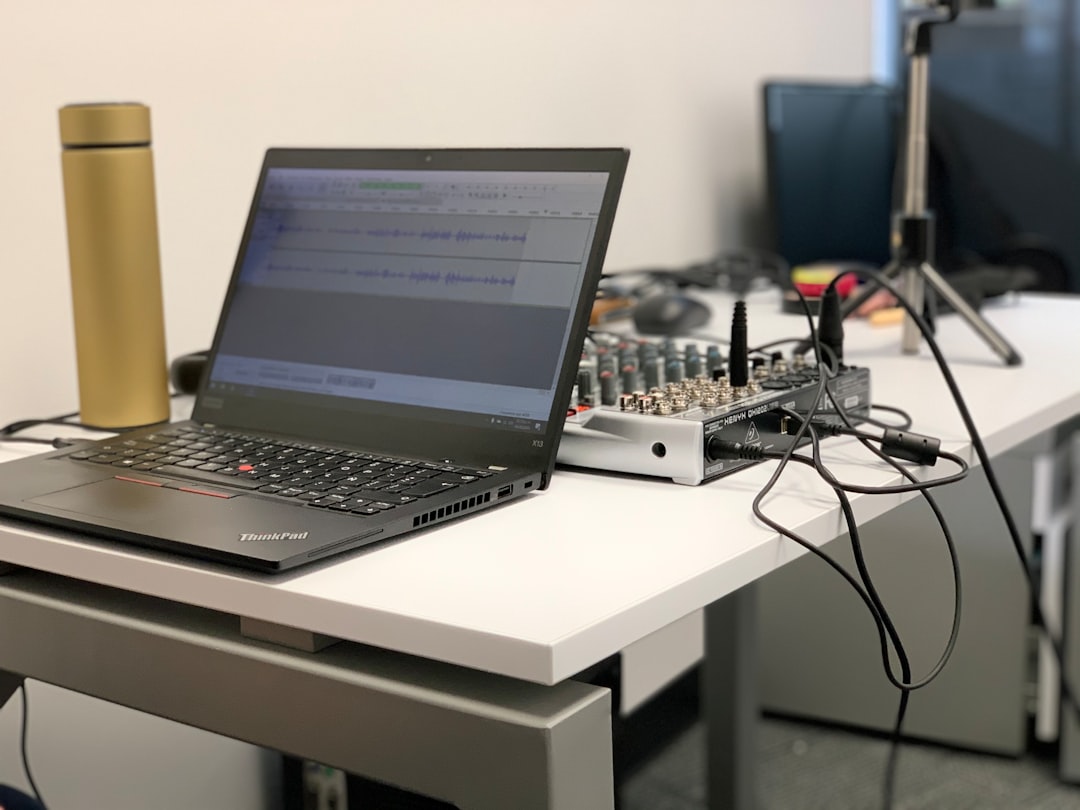
As podcasting has grown from a niche passion to a global industry, content creators have sought better tools to meet the demands of accessibility, global reach, and professional quality. Among the key innovations influencing the production pipeline is OpenAI’s Whisper—a powerful speech recognition model capable of transcribing audio with exceptional accuracy across multiple languages. For podcasters looking to make their episodes available to international audiences, high-quality transcription isn’t just a convenience—it is a foundation. This article explores how podcasters have used Whisper-based tools to improve transcript accuracy before automatically translating their episodes into other languages.
TL;DR
Whisper, a speech-to-text technology developed by OpenAI, has rapidly become essential for podcasters seeking accurate transcripts. Before translating podcasts into other languages, creators rely on Whisper-based tools to minimize errors in the raw transcription process. This ensures more faithful and nuanced translations, reduces post-editing workloads, and promotes better audience engagement worldwide. Whisper’s language-agnostic model offers both scalability and precision, even in challenging audio environments.
The Importance of Accurate Transcripts
In the early days of podcasting, transcriptions were often manually created, outsourced, or generated using unreliable software with poor results. Problems included misinterpretations, missing context, and incorrect speaker attributions. Fast forward to today, and transcription accuracy is no longer a luxury but a necessity—especially when content is set to be translated for multilingual listeners.
Accuracy in transcription is critical for a few reasons:
- Faithful representation of dialogue: Misheard words can dramatically alter the meaning of the content.
- Smoother automated translation: Basic errors in transcripts are amplified during auto-translation, creating more inaccuracies.
- SEO and discoverability: Search engines index podcast transcripts, so errors can impact the podcast’s visibility online.
- Accessibility: Many listeners depend on transcripts for understanding content due to hearing impairments or personal preference.
Introducing Whisper: A Game-Changer for Podcasters
Released by OpenAI in 2022, Whisper is a neural network trained on hundreds of thousands of hours of multilingual and multitask supervised data collected from the web. Unlike older solutions, Whisper is extremely effective in handling diverse accents, multiple languages, and overlapping speech patterns. It is an open-source model that podcasters have adopted swiftly into their production toolkits.
Podcasters began integrating Whisper-based tools for pre-translation transcription tasks for several reasons:
- High transcription accuracy across languages and accents
- Robust handling of background noise and casual speech
- Ease of automation in workflows for weekly or daily episodes
Whisper-Based Tools Used by Podcasters
Many third-party applications and integrations have taken Whisper’s capabilities and made them approachable for independent podcasters and media networks alike. Some popular Whisper-based tools include:
- Descript (with custom Whisper integration): A favorite among podcasters for mixing audio and video editing with transcript-based editing. Some users embed Whisper manually for improved initial transcripts before editing begins.
- WhisperX: A modified variant of Whisper offering speaker diarization, which helps label who is speaking at any point. This is essential for panel-based or interview-style podcasts.
- MacWhisper: A desktop application for Mac users that wraps Whisper into a lightweight GUI, offering local transcription without uploading data to the cloud—a priority for sensitive content creators.
These tools enable podcasters to preprocess their audio with minimal friction. Automatic diarization, punctuation inference, and time-stamping transform raw audio into a structured draft, ready for either final editing or translation.
Workflow Integration: From Recording to Multilingual Translation
How do modern podcasters incorporate Whisper into their workflows? The typical workflow usually follows a standardized path that ensures transcripts are maximally accurate prior to translation:
- Audio Cleanup: Use tools like Audacity or Adobe Audition to reduce background noise and eliminate obvious distractions.
- Initial Transcription with Whisper: Process the final mix through a Whisper-based tool to generate the initial transcript along with timestamps and speaker IDs.
- Manual Review: A light review phase helps spot-check critical sections such as technical jargon, brand names, or colloquialisms that tools may misinterpret.
- Auto-Translation: The reviewed transcript is then passed into translation engines like DeepL or Google Translate for generating multilingual versions of the content.
- Subtitle or Captions Generation: SubRip (.srt) or WebVTT files are generated from the translated transcript and synced back to the audio or video content.
Benefits Realized by Podcasters Using Whisper
The adoption of Whisper-based tools has led to measurable improvements in transcription and translation pipelines. Some concrete benefits include:
- Reduced Correction Time: Creators now spend less time correcting initial transcripts, cutting down production hours.
- Improved Translation Coherence: With fewer transcription errors, translations come through more logically and naturally.
- Enhanced Accessibility: Higher-quality transcripts mean better support for hard-of-hearing audiences and non-native speakers.
- Global Audience Reach: Podcasts translated with reliable transcripts offer a more trustworthy experience to international listeners, increasing listen-through rates.
Challenges and Limitations
Despite the clear advantages, Whisper is not without limitations. For instance:
- Computational Demands: Whisper models require significant GPU power for processing long episodes, making them slower to use without dedicated hardware.
- Accents in Overlapping Dialogue: In multi-speaker environments with cross-talk, the model can still struggle with clarity and speaker differentiation.
- Jargon and Slang: Unless the vocabulary is common in Whisper’s training corpus, it remains prone to misinterpretation without post-processing review.
That said, tools like WhisperX and integrations with existing editing platforms continue to address many of these shortcomings through supplementary AI techniques.
Future Outlook: Whisper and Beyond
The increasing sophistication of AI transcription and translation tools suggests this field will continue to evolve rapidly. OpenAI’s recent models focus on combining speech recognition with contextual reasoning, potentially eliminating even the need for post-editing in the future. Moreover, integrations with podcast distribution platforms (such as Spotify and Apple Podcasts) could eventually offer native Whisper-powered transcription and translation from within the ecosystem itself.
Podcasters are also experimenting with dynamic episode publishing—where a single recording is transformed into multiple language variants with localized intros, sponsor messages, and even culturally adapted metaphors. All of this depends on starting with a pristine, accurate transcription—an area where Whisper continues to play a critical role.
Conclusion
As the appetite for global audio content increases, podcasters are stepping up their production practices to meet the challenge. By embracing Whisper and Whisper-based tools, creators have significantly improved their transcripts, ensuring translations are more accurate and effective. Through this innovation, they are not just improving workflows—they are expanding the horizons of podcasting itself, making it more inclusive, accessible, and international.