 logo
logo

The invention of the microprocessor was a groundbreaking moment in computing history, as it paved the way for the modern digital age. At the heart of this revolution was the Intel 4004, the first commercial microprocessor ever produced. Released in 1971 by Intel Corporation, the 4004 represented the dawn of a new era by placing the computing power of an entire computer’s central processing unit onto a single silicon chip.
TL;DR: The Intel 4004 was the world’s first microprocessor, released in 1971. It was a 4-bit CPU designed initially for calculators and marked the beginning of Intel’s rise as a tech titan. Despite its limited power by today’s standards, it revolutionized computing by making it possible to build smaller, cheaper, and more powerful machines. The development of the 4004 set the stage for the evolution of personal computing and embedded devices.
What is the Intel 4004?
The Intel 4004 is the first commercially available microprocessor, developed by Intel under the leadership of engineers Federico Faggin, Ted Hoff, and Stanley Mazor. It was originally designed to serve as the CPU for the Busicom 141-PF printing calculator, a contract job from a Japanese calculator company called Busicom.
This innovation shifted traditional computing by condensing thousands of components that made up a computer’s processing unit onto a single integrated circuit. Unlike earlier designs that would use numerous chips to handle processing tasks, the 4004 brought all necessary logic onto one chip, drastically reducing size, cost, and complexity.
Technical Specifications of the Intel 4004
While modest by today’s standards, the 4004 was a technical marvel for its time. Below are some key specifications:
- Architecture: 4-bit
- Clock Speed: 740 kHz (standard)
- Instruction Cycle Time: 10.8 microseconds
- Transistor Count: 2,300
- Instruction Set: 46 instructions
- Max RAM: 640 bytes
- Manufacturing Technology: 10 µm silicon gate PMOS technology
Despite being extremely limited by modern comparison, its compact design and ability to run a software-driven computing model opened the doors to programmable general-purpose applications in electronics.
The Birth of the Microprocessor Era
Before the 4004, CPUs were custom-built with numerous components, often requiring several circuit boards. They were large, expensive, power-hungry, and lacked flexibility. Intel’s innovation changed everything. The team behind the 4004 managed to consolidate the control logic, arithmetic unit, and instruction sequencing into a chip only about the size of a fingernail.
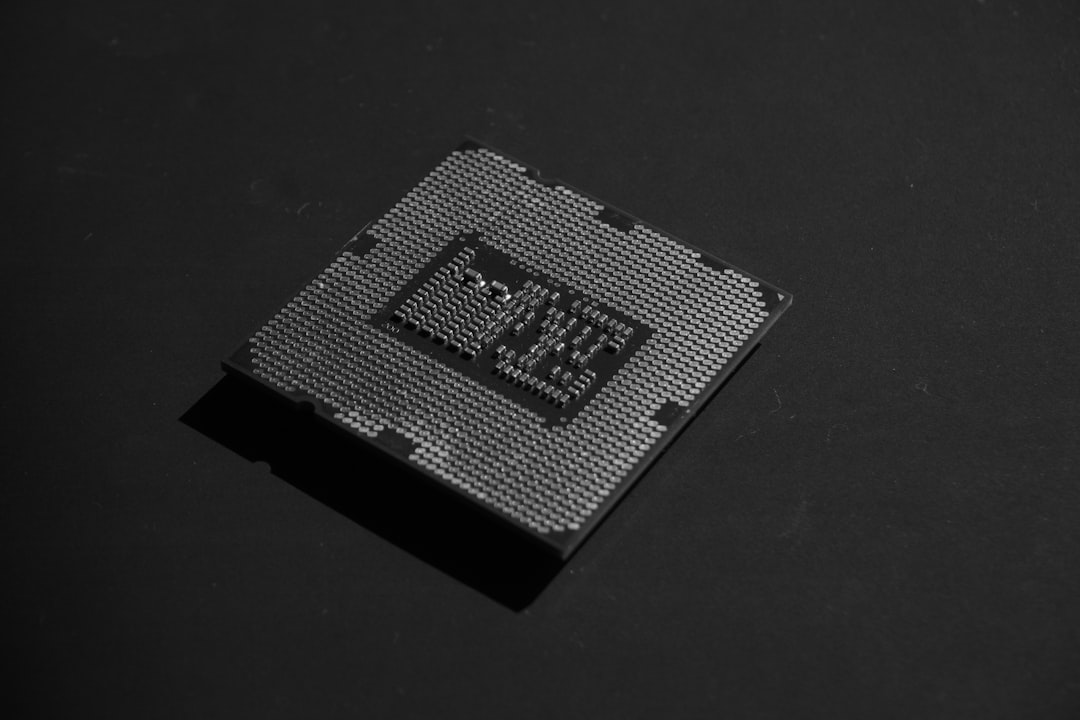
At first, Intel did not realize the full scope of what it had created. They saw the 4004 simply as a solution for a customer’s calculator product. However, after negotiations, Intel secured the rights to market the chip themselves, making history in the process. What followed was the rapid development of more powerful chips, including the 8008 and eventually the 8080, each laying the groundwork for personal computing.
Applications and Impact
The initial application of the 4004 was in calculators, most notably the Busicom 141-PF. Over time, its general-purpose programmability allowed it to find use in a wide range of embedded systems—everything from cash registers to traffic light controllers.
Here are a few examples of where the 4004 found application:
- Scientific calculators
- Cash dispensers
- Automated test equipment
- Point-of-sale machines
- Early robotics
Its affordability and form factor were crucial for enabling the mass production of consumer digital devices. By making computing cheaper and more energy-efficient, the Intel 4004 allowed companies and institutions to expand their technological horizons beyond what was economically feasible before.
Key Engineers Who Made It Happen
The development of the Intel 4004 wouldn’t have been possible without the vision and talent of its creators:
- Ted Hoff: Often credited with the architectural concept of the microprocessor, Hoff realized that a single-chip solution was possible for the Busicom calculator.
- Stanley Mazor: Played a key role in the development of the instruction set and architecture.
- Federico Faggin: The principal designer and project leader responsible for the actual chip design and silicon implementation.
Faggin’s expertise with silicon gate technology was especially instrumental in realizing a reliable and manufacturable chip. He later went on to found Zilog, another influential microprocessor company.
Legacy of the Intel 4004
The legacy of the Intel 4004 is profound. Although it was not intended to start a revolution, its success led directly to the formation of the microprocessor industry. Intel quickly capitalized on its success and began producing more powerful CPUs like the 8008, 8080, and eventually the legendary 8086, which formed the basis of the x86 architecture still used in most PCs today.
Image not found in postmetaHere are some of the legacies and lasting impacts of the Intel 4004:
- Established Intel as a major player in the semiconductor industry
- Created the foundation for personal computers
- Enabled miniaturization of electronics
- Set the stage for the development of embedded systems
- Initiated the concept of software-controlled hardware
Celebrating the 4004
In 2021, Intel celebrated the 50th anniversary of the 4004, highlighting it as one of the company’s most monumental achievements. Its initial limitations—such as a mere 640 bytes of addressable RAM—only underscore how far technology has come, and how humble the beginnings of today’s digital society truly were.
The chip serves not just as a technical milestone, but also as a cultural artifact, representing the start of the digital transformation that now touches virtually every aspect of modern life.
FAQs About the Intel 4004 Processor
-
Q: When was the Intel 4004 released?
A: It was released in November 1971 by Intel Corporation. -
Q: What was the Intel 4004 used for?
A: It was initially designed for a calculator but was also used in embedded systems such as cash registers and automated industrial equipment. -
Q: How powerful was the 4004 compared to modern processors?
A: Very limited by today’s standards. It was a 4-bit processor with a clock speed of 740 kHz and could address only up to 640 bytes of RAM. -
Q: Who were the people behind the Intel 4004?
A: Key engineers included Federico Faggin, Ted Hoff, and Stanley Mazor. -
Q: Why is the 4004 significant?
A: It was the first commercially available microprocessor, fundamentally changing the architecture of computing and leading to the development of personal and embedded computing as we know it.
The Intel 4004 may seem primitive today, but without it, the computing world might have evolved much more slowly. It serves as a reminder that even small innovations can lead to sweeping global transformations.
