 logo
logo

Artificial intelligence has rapidly evolved from a futuristic concept into an everyday productivity powerhouse. Across industries such as healthcare, finance, e-commerce, education, and software development, AI chatbots are transforming the way teams operate. By automating repetitive tasks, accelerating research, improving communication, and supporting decision-making, today’s most advanced AI chatbots are helping organizations reclaim valuable time and dramatically increase output.
TLDR: AI chatbots are driving up to 90% productivity gains by automating communication, streamlining workflows, and accelerating decision-making across industries. Tools like ChatGPT, Microsoft Copilot, Google Gemini, Claude, and industry-specific bots are transforming operations in real time. Businesses that integrate these solutions strategically are seeing faster turnaround times, reduced costs, and improved employee efficiency. The competitive advantage is no longer optional—it’s essential.
What once required large teams and days of manual effort can now be completed in minutes. From drafting reports and analyzing large datasets to managing customer service and generating code, AI chatbots are redefining efficiency standards. Below are five game-changing AI chatbots that are boosting productivity by as much as 90% across diverse industries.
1. ChatGPT – The Versatile Productivity Engine
ChatGPT has become one of the most widely adopted AI chatbots due to its adaptability and ease of integration. Businesses use it for drafting emails, producing marketing copy, summarizing documents, generating code snippets, and even automating internal knowledge bases.
In marketing departments, ChatGPT can reduce content creation time by up to 80%. Legal teams use it to summarize lengthy contracts. HR departments rely on it to draft job descriptions and onboarding materials. Software developers employ it to debug code and accelerate development cycles.

Key productivity advantages include:
- Rapid content and document generation
- Idea brainstorming and research support
- Code creation and debugging assistance
- Workflow automation through API integrations
Its flexibility makes it applicable across industries, significantly reducing turnaround time for both creative and operational tasks.
2. Microsoft Copilot – Enterprise Workflow Accelerator
Microsoft Copilot integrates directly with the Microsoft 365 ecosystem, embedding AI support within familiar tools such as Word, Excel, Outlook, and Teams. This deep integration is what makes it transformative for enterprise environments.
Instead of switching between platforms, employees can ask Copilot to summarize email threads, generate presentations from raw data, analyze spreadsheets, or create meeting summaries—all within the same workspace.
Enterprise teams report:
- Major reductions in meeting documentation time
- Automated data analysis in Excel
- Instant report generation in Word
- Email drafting in seconds instead of minutes
Copilot shines in structured business environments where productivity gains compound quickly across large teams.
3. Google Gemini – Data-Driven Decision Enhancer
Google Gemini stands out for its deep integration with Google Workspace and its advanced multimodal capabilities. Professionals working heavily with Google Docs, Sheets, Gmail, and data analytics platforms benefit from real-time AI assistance.
Gemini excels at synthesizing large volumes of information and delivering concise insights. In research-heavy industries like finance and consulting, this capability alone can reduce analysis time by up to 70%.
Core strengths include:
- Advanced data interpretation
- Email and document optimization
- Research summarization
- Cross-document insights
By transforming scattered information into actionable intelligence almost instantly, Gemini supports faster, more confident decision-making.
4. Claude – Safe and Structured Enterprise AI
Claude has gained popularity among enterprises prioritizing compliance, safety, and contextual depth. Its ability to process long documents makes it especially valuable in industries such as healthcare, law, and academia.

Organizations use Claude to:
- Review and summarize policy documents
- Analyze regulatory frameworks
- Create structured reports
- Assist with academic and technical writing
Claude’s performance with large context windows allows entire documents—contracts, research papers, technical proposals—to be reviewed and summarized in a fraction of the traditional time required. For compliance-focused industries, this represents a dramatic efficiency boost.
5. Industry-Specific AI Chatbots – Specialized Productivity Titans
Beyond general-purpose AI chatbots, many industries are deploying highly specialized AI assistants tailored to their precise needs.
Examples include:
- Healthcare bots: Assisting with patient triage, documentation, and appointment scheduling
- E-commerce bots: Managing customer inquiries and product recommendations
- Financial service bots: Providing instant analytics and compliance monitoring
- IT helpdesk bots: Resolving internal technical issues autonomously
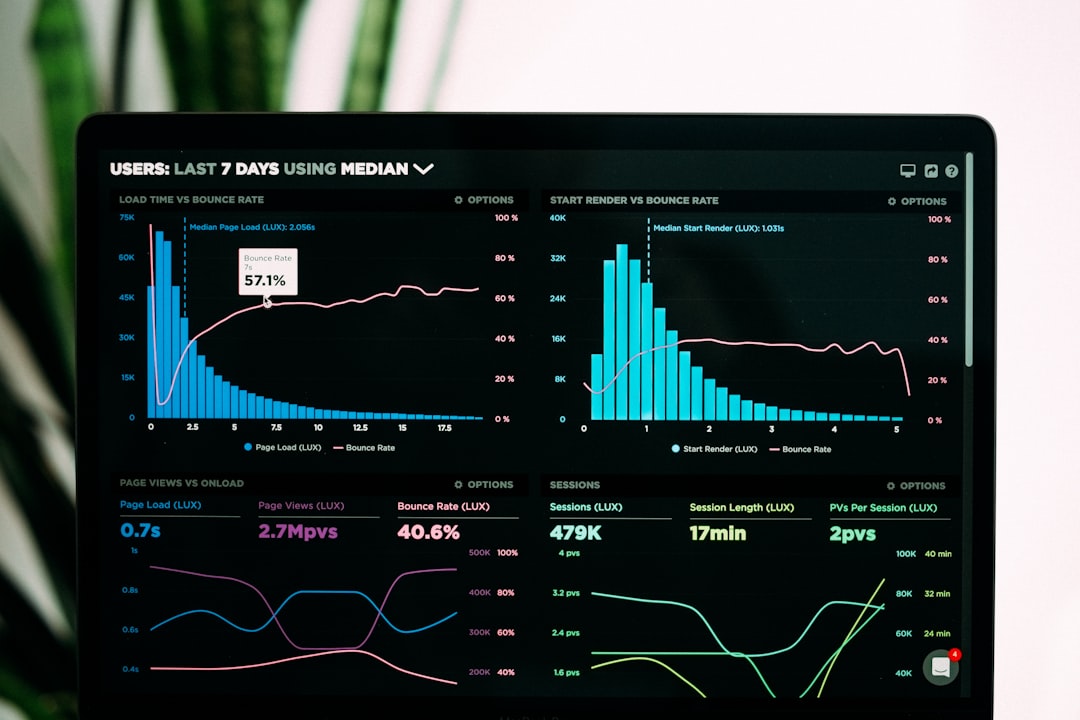
These targeted solutions often produce the most measurable productivity gains because they focus on highly repetitive workflows. In customer support environments, AI chatbots have reduced response times by up to 90% while operating 24/7 without fatigue.
Comparison Chart: The Top 5 Productivity-Boosting AI Chatbots
| AI Chatbot | Primary Strength | Best For | Estimated Productivity Gain | Integration Level |
|---|---|---|---|---|
| ChatGPT | Versatile content and coding support | Marketing, HR, Development | 60–85% | High via API |
| Microsoft Copilot | Deep Microsoft 365 integration | Enterprise teams | 70–90% | Native to ecosystem |
| Google Gemini | Data analysis and research synthesis | Consulting, Finance, Research | 60–80% | Google Workspace native |
| Claude | Long document processing | Legal, Healthcare, Academia | 65–85% | API and enterprise platforms |
| Industry-Specific Bots | Targeted workflow automation | Support, Healthcare, Ecommerce | 70–90% | Custom deployment |
How AI Chatbots Are Achieving 90% Productivity Gains
The dramatic increase in productivity stems from five major factors:
- Automation of Repetitive Tasks: Manual documentation, responses, and reporting are minimized.
- Instant Data Analysis: Large data sets can be interpreted in seconds.
- 24/7 Availability: AI never sleeps, eliminating workflow bottlenecks.
- Reduction in Human Error: Consistency improves output quality.
- Seamless Integrations: Embedding AI into existing tools removes friction.
Rather than replacing human workers, these chatbots amplify human capability. Employees spend less time on routine tasks and more time on strategic thinking, creativity, and relationship building.
Implementation Best Practices
To achieve maximum productivity gains, organizations typically:
- Identify high-friction workflows
- Start with pilot programs
- Provide employee training
- Integrate AI directly into daily tools
- Continuously monitor performance metrics
Companies that treat AI adoption as a strategic transformation—not just a technical upgrade—see the greatest returns.
The Future of AI-Driven Workplaces
As AI chatbots continue to evolve with multimodal capabilities, deeper integrations, and improved reasoning, productivity gains are expected to increase even further. Industries that once required extensive administrative overhead are becoming leaner and more agile.
The competitive landscape is shifting rapidly. Organizations leveraging AI chatbots effectively are operating faster, delivering better service, and reducing operational costs at scale. Those that delay adoption risk falling behind in efficiency and innovation.
Frequently Asked Questions (FAQ)
1. Can AI chatbots really increase productivity by 90%?
Yes, in task-specific environments such as customer support, documentation, and data analysis, AI chatbots can automate most repetitive actions, leading to productivity improvements approaching 90%.
2. Are AI chatbots replacing human employees?
In most cases, they augment rather than replace workers. By handling routine tasks, AI allows employees to focus on higher-value strategic work.
3. Which industries benefit the most from AI chatbots?
Healthcare, finance, marketing, software development, legal services, and e-commerce currently see the strongest productivity gains.
4. Is it expensive to implement AI chatbots?
Costs vary depending on integration depth and customization. However, many organizations report that efficiency gains quickly offset implementation costs.
5. What is the biggest risk when adopting AI chatbots?
The primary risks include data security concerns, lack of employee training, and poor integration planning. Strategic deployment significantly minimizes these challenges.
6. How should a company begin integrating AI chatbots?
Start by identifying repetitive workflows, choose a suitable chatbot, run a pilot program, train employees, and measure productivity improvements before scaling implementation.
AI chatbots are no longer experimental tools—they are operational necessities. By intelligently automating tasks and accelerating workflows, these five game-changing solutions are redefining productivity standards across industries, empowering organizations to accomplish in hours what once took days.
