


Silicon Valley continues to redefine the future of artificial intelligence in 2026, with a new wave of startups pushing the boundaries of machine learning, generative AI, robotics, and enterprise automation. Fueled by record-breaking venture capital investments and rapid enterprise adoption, these companies are not only scaling at unprecedented speed but also reshaping industries from healthcare to cybersecurity. Below, we explore the Top 10 hottest AI startups in Silicon Valley in 2026, highlighting their growth trajectories, funding milestones, and what makes them stand out in an increasingly competitive ecosystem.
TL;DR: Silicon Valley’s AI boom in 2026 is driven by startups specializing in generative AI, robotics, AI semiconductors, enterprise copilots, and healthcare intelligence. The top 10 fastest-growing companies have collectively raised over $18 billion, with valuations soaring past $2–15 billion each. Enterprise AI automation and vertical-specific AI models are leading market demand. Investors are doubling down on startups with scalable infrastructure, proprietary data advantages, and real-world deployment traction.
1. Cognify Labs
Focus: Enterprise AI copilots
Total Funding: $1.4B
2026 Valuation: $8.5B
Cognify Labs has become the go-to AI productivity platform for Fortune 500 companies. Its autonomous enterprise copilots integrate directly into CRMs, internal databases, and workflow platforms, reducing operational tasks by up to 40%. In early 2026, the company closed a massive Series D round amid growing adoption in finance, logistics, and retail.
The startup’s secret lies in its proprietary enterprise reasoning engine, enabling context-rich decision-making that surpasses traditional generative AI tools.

2. NeuroWeave Systems
Focus: Custom AI chip manufacturing
Total Funding: $2.2B
2026 Valuation: $15B
AI hardware remains a bottleneck for scalability, and NeuroWeave Systems is solving this problem head-on. The company develops next-generation low-power AI training chips optimized for transformer models and edge computing.
With hyperscalers investing heavily in proprietary infrastructure, NeuroWeave’s strategic partnerships have made it one of the fastest-scaling semiconductor startups since 2023.
3. MediSynapse AI
Focus: Clinical decision AI
Total Funding: $980M
2026 Valuation: $6.3B
MediSynapse AI uses multimodal models trained on medical imaging, genomics, and patient histories to assist doctors in diagnosis and treatment planning. FDA-backed clinical studies in 2025 propelled widespread hospital adoption.
The healthcare sector has been slower to embrace AI—but MediSynapse’s regulatory-first approach gave it a significant competitive edge.
4. VectorMind AI
Focus: Autonomous robotics software
Total Funding: $1.1B
2026 Valuation: $7.2B
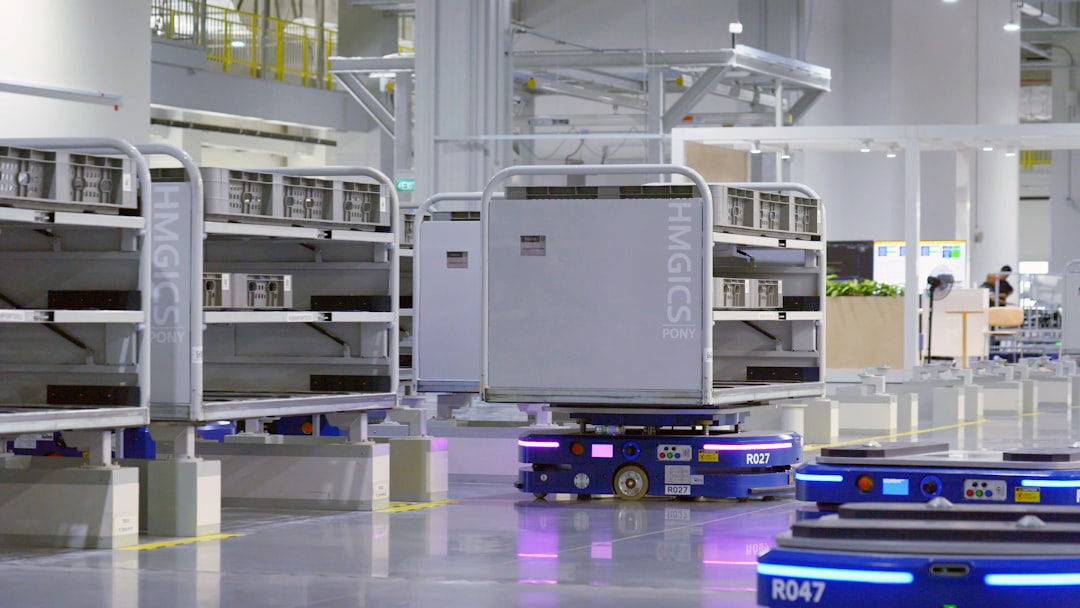
VectorMind AI builds adaptive learning systems for logistics robots and warehouse automation. Unlike rule-based automation platforms, its models improve dynamically using real-time reinforcement learning.
Major global retailers have adopted VectorMind-powered fleets, contributing to triple-digit revenue growth in two consecutive years.
5. Synthara Labs
Focus: Generative video AI
Total Funding: $870M
2026 Valuation: $5.6B
Synthara Labs is revolutionizing video content production with ultra-realistic generative AI models. Marketing agencies, film studios, and e-learning platforms rely on Synthara for rapid content creation at scale.
The startup’s proprietary temporal diffusion architecture improves realism and motion continuity — problems that plagued earlier AI video platforms.
6. TitanGuard AI
Focus: AI cybersecurity defense systems
Total Funding: $760M
2026 Valuation: $4.8B
Cyber threats are evolving as quickly as AI itself. TitanGuard leverages autonomous AI agents that detect, isolate, and neutralize threats in real-time across distributed cloud environments.
With enterprise ransomware attacks increasing in sophistication, TitanGuard’s growth has surged 210% year-over-year.
7. QuantumLayer AI
Focus: AI optimization for quantum computing
Total Funding: $640M
2026 Valuation: $3.9B
Straddling two transformative technologies, QuantumLayer develops AI systems that optimize quantum circuit simulations and hybrid systems. As quantum hardware inches closer to commercial viability, AI-driven optimization is becoming indispensable.
This niche yet high-potential positioning has attracted both venture capital and government research funding.
8. GreenGrid Intelligence
Focus: AI for energy grid optimization
Total Funding: $720M
2026 Valuation: $4.1B
GreenGrid Intelligence applies predictive AI to renewable energy storage, distribution forecasting, and power grid balance. As climate policies accelerate clean energy transitions, AI-driven grid resilience has become mission-critical.
The startup recently secured multi-year contracts with three major U.S. utility providers.
9. PersonaForge AI
Focus: Synthetic data and AI avatars
Total Funding: $580M
2026 Valuation: $3.2B
PersonaForge creates compliant synthetic datasets and customizable AI avatars for enterprise client interaction. From customer support to virtual influencers, the applications are vast.
Its privacy-first approach positions it strongly in regulated markets like finance and healthcare.
10. DeepAxis Intelligence
Focus: Vertical AI models for legal and finance
Total Funding: $1.5B
2026 Valuation: $9.4B
DeepAxis Intelligence develops domain-specific foundation models trained exclusively on financial filings, legal documents, and regulatory frameworks. These models outperform general-purpose LLMs in precision-heavy industries.
The company’s focused strategy has paid off, with top-tier law firms and investment banks integrating DeepAxis APIs into daily operations.

Comparison Chart: Top AI Startups in Silicon Valley (2026)
| Startup | Primary Focus | Total Funding | 2026 Valuation | Primary Industry Impact |
|---|---|---|---|---|
| Cognify Labs | Enterprise Copilots | $1.4B | $8.5B | Corporate Productivity |
| NeuroWeave Systems | AI Chips | $2.2B | $15B | AI Infrastructure |
| MediSynapse AI | Healthcare AI | $980M | $6.3B | Clinical Diagnostics |
| VectorMind AI | Robotics Software | $1.1B | $7.2B | Logistics Automation |
| Synthara Labs | Generative Video | $870M | $5.6B | Media Production |
| TitanGuard AI | Cybersecurity AI | $760M | $4.8B | Enterprise Security |
| QuantumLayer AI | Quantum Optimization | $640M | $3.9B | Advanced Computing |
| GreenGrid Intelligence | Energy AI | $720M | $4.1B | Renewable Infrastructure |
| PersonaForge AI | Synthetic Data | $580M | $3.2B | Digital Avatars |
| DeepAxis Intelligence | Vertical AI Models | $1.5B | $9.4B | Legal & Finance |
Key Trends Driving AI Startup Growth in 2026
1. Vertical Specialization
General AI models are giving way to highly specialized platforms built for finance, law, healthcare, and energy. Tailored datasets and fine-tuned architectures are proving more scalable for enterprise adoption.
2. Infrastructure Arms Race
The surge in AI usage has intensified demand for proprietary chips and optimized compute solutions. Startups like NeuroWeave illustrate how hardware innovation directly fuels AI scalability.
3. Autonomous AI Agents
Many of these startups are shifting from passive AI tools to proactive agents capable of end-to-end task execution. This dramatically boosts efficiency metrics, attracting larger contracts.
4. Regulatory Alignment
Regulatory compliance is now a competitive advantage, particularly in healthcare and finance. Companies integrating compliance frameworks from day one are accelerating adoption cycles.
The Big Picture
The Silicon Valley AI ecosystem in 2026 is far more mature than its 2023–2024 counterpart. Venture funding remains strong but increasingly selective, rewarding startups with demonstrable enterprise traction, proprietary datasets, and defensible technology moats.
Collectively, these 10 startups represent:
- Over $18 billion in cumulative funding
- More than $67 billion in combined valuation
- Thousands of enterprise clients globally
While generative AI initially sparked the modern surge, it is now the practical, industry-specific implementation of AI that is driving serious revenue growth. Silicon Valley’s hottest AI startups in 2026 are no longer just experimenting — they are building critical infrastructure for the global economy.
As AI continues integrating into every sector, these companies may well become the enterprise giants of the next decade. Investors are watching carefully. Competitors are racing to keep pace. And the rest of the world is adapting to an AI-powered future shaped, once again, in Silicon Valley.
