 logo
logo

Open source handwriting recognition has evolved from a niche academic pursuit into a powerful, community-driven field supporting everything from note-taking apps to archival digitization projects. By combining machine learning, computer vision, and collaborative software development, open source solutions now rival many proprietary systems. However, achieving high accuracy remains a complex task due to the infinite variability of human handwriting, data limitations, and preprocessing challenges. Understanding both the promise and the obstacles of these systems is essential for developers, researchers, and organizations seeking flexible and cost-effective recognition tools.
TLDR: Open source handwriting recognition uses machine learning and computer vision to convert handwritten text into digital format. While modern models can achieve impressive accuracy, they struggle with messy, diverse, or low-quality handwriting. Key challenges include data variability, preprocessing, and language modeling. Popular open source tools such as Tesseract, OCRopus, and deep learning frameworks provide flexible solutions for custom applications.
At its core, handwriting recognition is the process of transforming handwritten text in images or on digital devices into machine-readable characters. There are two primary types:
- Offline handwriting recognition – Processes static images of handwritten text (for example, scanned documents).
- Online handwriting recognition – Captures pen movements in real time, such as with a stylus on a touchscreen.
Open source implementations exist for both types, though offline recognition is more commonly addressed due to its relevance in document digitization and historical archives.
How Open Source Handwriting Recognition Works
Most modern open source handwriting recognition systems rely heavily on deep learning techniques. Traditional rule-based systems struggled with handwriting variability, but neural networks have significantly improved performance.
The recognition process typically follows these stages:
- Image Acquisition – A scanned image or photo of handwritten text is captured.
- Preprocessing – Noise removal, binarization, normalization, and skew correction are applied.
- Segmentation – The system separates lines, words, or characters.
- Feature Extraction – Visual features are analyzed using convolutional neural networks (CNNs).
- Sequence Modeling – Recurrent neural networks (RNNs) or transformers interpret character sequences.
- Language Modeling – Probabilities are refined based on linguistic context.
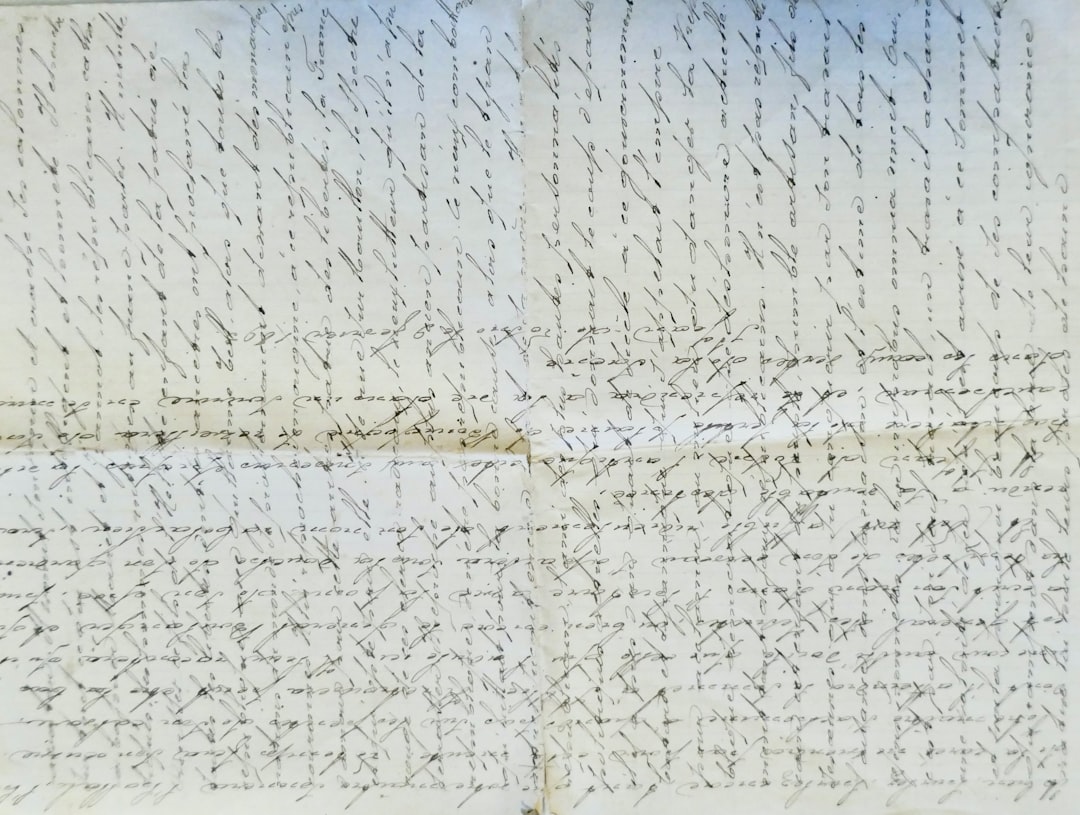
In recent years, Convolutional Neural Networks (CNNs) and Long Short-Term Memory (LSTM) networks have become foundational components. These are often combined in architectures known as CRNNs (Convolutional Recurrent Neural Networks). More recently, transformer-based models have emerged as powerful alternatives.
The Major Challenges
Despite progress, handwriting recognition remains far more difficult than printed OCR. The primary challenges include:
1. Variability of Human Handwriting
No two people write exactly the same way. Differences include:
- Letter shapes and sizes
- Spacing between words
- Slant and curvature
- Pressure patterns
- Connected or cursive text
This high variability forces models to generalize across immense diversity. Even the same writer may produce different styles depending on speed or context.
2. Data Scarcity and Quality
Deep learning models require large annotated datasets. However, compiling labeled handwriting data is:
- Time-consuming
- Costly
- Language-specific
While datasets like IAM Handwriting Database exist for English, many languages lack sufficient open datasets. Low-resource languages remain a significant challenge.
3. Preprocessing Complexity
Scanned documents may include:
- Shadows
- Stains
- Skewed alignment
- Overlapping text
Without strong preprocessing, recognition accuracy drops sharply. Open source tools often require careful tuning to handle document variability.
4. Cursive and Connected Scripts
Segmenting individual characters in cursive writing is extremely complex. Modern systems often bypass character segmentation entirely by predicting sequences, but heavily stylized or overlapping cursive still poses difficulties.
5. Multilingual and Multiscript Recognition
Languages vary in character sets, grammar rules, and structure. Scripts such as Arabic, Devanagari, or Chinese introduce additional recognition complexity, requiring specialized training data and models.
Accuracy: What to Expect
Open source handwriting recognition systems can achieve impressive results when properly trained and tuned. However, accuracy depends on several factors:
- Quality of input images
- Volume and relevance of training data
- Language modeling integration
- Model architecture
- Preprocessing pipeline robustness
In controlled academic benchmarks, modern systems may reach 90% to 97% character accuracy. However, real-world accuracy often varies significantly.

Performance is typically measured using:
- Character Error Rate (CER) – Percentage of incorrect characters.
- Word Error Rate (WER) – Percentage of incorrect words.
- Sequence accuracy – Measures correct full-line predictions.
It is important to note that even small improvements in CER can significantly improve readability for downstream applications. Integrating a strong language model can reduce errors caused by ambiguous character shapes.
Popular Open Source Tools and Frameworks
Several well-established open source projects support handwriting recognition development:
1. Tesseract OCR
Tesseract is one of the most widely used open source OCR engines. While originally optimized for printed text, its newer LSTM-based engine supports handwriting recognition with appropriate training.
Strengths:
- Strong community support
- Multilingual capabilities
- Custom training options
Limitations:
- Requires careful training for cursive handwriting
- Preprocessing is often necessary
2. OCRopus
OCRopus is a modular OCR system built around LSTM networks. It offers flexibility for research and experimentation but may require more technical expertise to implement effectively.
3. Kraken
Kraken is derived from OCRopus and focuses on historical document recognition. It is particularly useful for research projects involving archival materials.
4. Calamari OCR
Calamari uses deep learning models with GPU support and offers improved training pipelines compared to older frameworks. It supports ensemble learning for accuracy enhancement.
5. Deep Learning Frameworks
Some developers build custom handwriting recognition models using:
- TensorFlow
- PyTorch
- Keras
This approach provides maximum flexibility but requires strong machine learning knowledge.
Image not found in postmetaThe Role of Language Models
Language models significantly enhance recognition accuracy by predicting likely word sequences. For example, if a model reads “recogntion,” a language model can infer that “recognition” is more probable.
Open source projects often integrate:
- N-gram language models
- Transformer-based models
- Custom domain-specific dictionaries
For domain-specific use cases such as medical or legal documents, training a specialized language model can dramatically improve results.
Use Cases for Open Source Handwriting Recognition
Organizations and developers employ open source handwriting recognition in various applications:
- Archival digitization – Converting historical manuscripts into searchable text.
- Education technology – Automated grading of handwritten assignments.
- Note-taking apps – Converting handwritten notes into searchable content.
- Form processing – Automating handwritten survey or medical form entry.
- Accessibility tools – Assisting users with visual impairments.
Open source solutions are particularly appealing for institutions requiring full data control and customization.
Advantages of Open Source Solutions
- Transparency – Source code can be inspected and modified.
- Cost efficiency – No licensing fees.
- Customization – Models can be trained for specific handwriting styles.
- Community-driven improvement – Ongoing contributions from researchers worldwide.
For research institutions and startups, these benefits often outweigh the convenience of proprietary solutions.
Limitations and Considerations
Despite their strengths, open source handwriting recognition systems require:
- Technical expertise
- Computational resources
- Time for training and tuning
Organizations must assess whether they have the internal capacity to deploy and maintain such systems effectively.
The Future of Open Source Handwriting Recognition
The rapid development of transformer models and multimodal AI systems suggests significant progress ahead. Few-shot and zero-shot learning techniques may help overcome data scarcity issues. Additionally, collaborative dataset creation initiatives are expanding multilingual support.
As computing power becomes more accessible and community datasets grow, open source handwriting recognition is likely to see continued improvements in both accuracy and usability.
FAQ
1. Is open source handwriting recognition accurate enough for business use?
Yes, in many cases it is, especially when models are trained on domain-specific data. However, careful testing and optimization are necessary to ensure consistent performance.
2. What is the difference between OCR and handwriting recognition?
OCR generally refers to recognizing printed text, while handwriting recognition specifically targets handwritten input, which is far more variable and challenging.
3. Can open source tools recognize cursive writing?
Yes, but accuracy depends heavily on training data and model architecture. Cursive handwriting remains one of the most difficult cases.
4. Do I need machine learning expertise to use these tools?
Basic usage may not require deep expertise, but training custom models and optimizing performance typically demand knowledge of machine learning and neural networks.
5. Are open source handwriting recognition tools free?
Most are freely available under open source licenses, though infrastructure, training time, and maintenance may incur operational costs.
6. How can accuracy be improved?
Accuracy can be enhanced by using high-quality training data, robust preprocessing, domain-specific language models, and ensemble learning techniques.
