 logo
logo
Choosing a gaming monitor in 2026 is less about finding the single “best” screen and more about matching the display to the way you actually play. Competitive players may care most about motion clarity and input latency, while casual players may value immersion, color quality, HDR, and screen size. The big decision usually comes down to three popular categories: 144Hz monitors, 240Hz monitors, and ultrawide displays.
TLDR: For most gamers in 2026, a good 144Hz or 165Hz monitor still offers the best value and feels dramatically smoother than 60Hz. 240Hz monitors are ideal for competitive esports players who can consistently push high frame rates. Ultrawide monitors are excellent for immersion, racing, RPGs, and productivity, but they are not always the best choice for serious competitive gaming.
Why Refresh Rate Still Matters in 2026
The refresh rate of a monitor tells you how many times per second the screen updates. A 144Hz display refreshes 144 times per second, while a 240Hz display refreshes 240 times per second. In gaming, this affects both how smooth motion appears and how quickly visual information reaches your eyes.
In practical terms, higher refresh rates make fast camera movement look cleaner, reduce perceived blur, and can make aiming feel more responsive. This matters a lot in games like Counter Strike 2, Valorant, Fortnite, Overwatch 2, and battle royale titles where quick reactions can decide a match.
However, refresh rate is only one part of the experience. A great gaming monitor also needs low response times, low input lag, good adaptive sync support, strong panel quality, and a resolution your gaming PC or console can actually handle.
144Hz Monitors: The Sweet Spot for Most Gamers
A 144Hz gaming monitor remains one of the smartest purchases for many players in 2026. Even though higher refresh rates are more common now, 144Hz still delivers a huge upgrade over traditional 60Hz screens. Movement feels smoother, mouse control feels more direct, and games generally become more comfortable to play for long sessions.
The biggest advantage of 144Hz is balance. These monitors are widely available, affordable, and offered in many resolutions, including 1080p, 1440p, and 4K. You do not need an ultra expensive graphics card to take advantage of them, especially at 1080p or 1440p.
Best for:
- Casual and semi competitive gamers
- Players upgrading from 60Hz or 75Hz
- Single player games, RPGs, racing games, and shooters
- Gamers who want strong performance without overspending
- 1440p gaming with a midrange or upper midrange GPU
For many people, 144Hz at 1440p is the ideal combination. You get sharp visuals, smooth gameplay, and reasonable hardware requirements. A 27 inch 1440p 144Hz IPS or OLED monitor can feel premium without costing as much as a top tier 240Hz or 4K ultrawide model.
That said, 144Hz may not be enough for highly competitive players who are already used to faster displays. If you are chasing every possible advantage in ranked esports, you may notice the extra smoothness of 240Hz or higher.
240Hz Monitors: Built for Competitive Speed
A 240Hz monitor is designed for gamers who prioritize speed above almost everything else. Compared with 144Hz, 240Hz offers more frequent screen updates, lower frame intervals, and smoother tracking in fast paced games. The difference is not as dramatic as jumping from 60Hz to 144Hz, but it is noticeable to many experienced players.
At 144Hz, a new frame appears roughly every 6.94 milliseconds. At 240Hz, that drops to about 4.17 milliseconds. This can make aiming, flick shots, and target tracking feel more fluid. In competitive environments, even tiny improvements in clarity and responsiveness can help.
Best for:
- Esports players and ranked competitive gamers
- Fast shooters and games with high frame rate support
- Players with powerful PCs capable of 240 frames per second
- Gamers who value low latency over maximum visual quality
- 1080p or 1440p competitive setups
The catch is that a 240Hz monitor only shines when your system can produce frame rates close to 240 FPS. If your game runs at 90 to 130 FPS most of the time, you will not fully benefit from a 240Hz display. That is why many competitive players choose lower graphics settings to maximize frame rate.
In 2026, 1440p 240Hz monitors are especially attractive. They offer sharper visuals than 1080p while still providing esports level smoothness. For serious competitive players with modern graphics cards, this is one of the best all around choices available.
Ultrawide Monitors: Immersion Over Pure Speed
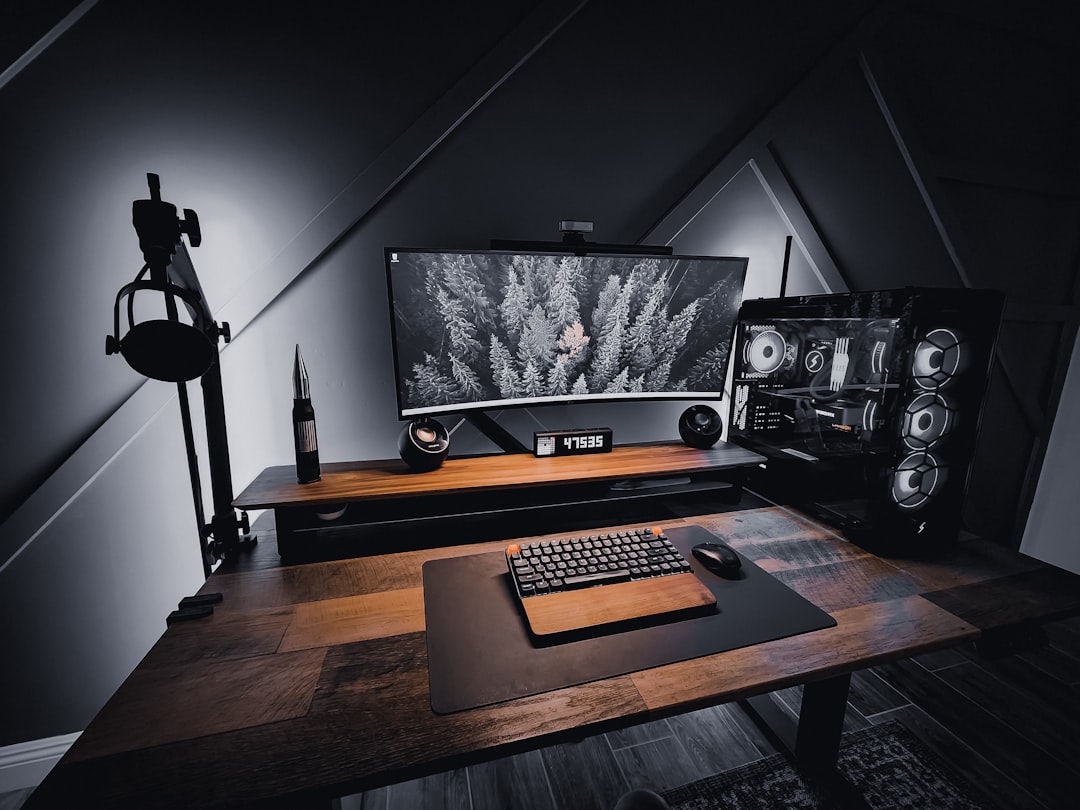
Ultrawide gaming monitors use a wider aspect ratio than standard 16:9 displays. The most common format is 21:9, while super ultrawide monitors can reach 32:9. Instead of simply giving you a bigger screen, ultrawide displays expand your horizontal field of view in supported games, making worlds feel more cinematic and immersive.
If you play open world adventures, racing sims, flight sims, strategy games, MMOs, or story driven titles, ultrawide can be stunning. A curved ultrawide monitor can wrap the image around your vision and make you feel more connected to the game world.

Best for:
- Casual gaming and cinematic single player experiences
- Racing, simulation, role playing, and strategy games
- Gamers who also want more space for productivity
- Players who value immersion and screen real estate
- Streamers and creators who multitask while gaming
Ultrawide monitors are not always ideal for competitive gaming. Some esports titles limit ultrawide support to prevent unfair field of view advantages. Others support ultrawide but may stretch menus, cut off interface elements, or require tweaking. Also, ultrawide resolutions are more demanding, meaning your GPU must work harder to maintain high frame rates.
Still, if your priority is fun, atmosphere, and visual impact, an ultrawide monitor can be one of the most satisfying upgrades you can make.
144Hz vs 240Hz vs Ultrawide: Quick Comparison
| Monitor Type | Main Strength | Best Use Case | Potential Drawback |
|---|---|---|---|
| 144Hz | Great value and smooth performance | Casual, mixed, and semi competitive gaming | Not the fastest option for esports |
| 240Hz | Excellent motion clarity and responsiveness | Competitive shooters and esports | Requires high FPS to be worthwhile |
| Ultrawide | Immersion and extra screen space | Single player, racing, sims, productivity | Less consistent competitive game support |
Resolution: 1080p, 1440p, or 4K?
Refresh rate gets a lot of attention, but resolution matters just as much. In 2026, 1080p is still common for esports because it is easy to drive at very high frame rates. A 1080p 240Hz monitor can be a smart choice if performance is your top priority.
1440p is the modern sweet spot for many PC gamers. It looks much sharper than 1080p but is easier to run than 4K. A 27 inch 1440p display at 144Hz, 165Hz, or 240Hz offers an excellent balance of clarity and speed.
4K gaming monitors are ideal for players who want maximum detail, especially on larger screens. However, high refresh 4K gaming still requires powerful hardware. A 4K 144Hz monitor can be fantastic for premium gaming, but competitive players may prefer 1440p 240Hz for better frame rates.
Panel Technology: IPS, OLED, and Mini LED
Panel quality can dramatically affect your experience. IPS panels remain popular because they offer good color accuracy, wide viewing angles, and fast response times. They are a safe choice for most gamers.
OLED monitors have become more common and more refined by 2026. They offer near instant pixel response, perfect blacks, excellent contrast, and beautiful HDR. For both competitive and cinematic gaming, OLED can look and feel incredible. The main concerns are price and potential burn in, although modern protection features have improved a lot.
Mini LED monitors are another strong option, especially for HDR gaming. They can get very bright and offer better contrast than standard LCD displays, though blooming can still appear around bright objects on dark backgrounds.

What Competitive Gamers Should Buy
If you mainly play competitive shooters, your priority should be high refresh rate, low input lag, and reliable motion clarity. For most serious players, the best choices are:
- 1080p 240Hz or higher for maximum frame rate and low hardware demand
- 1440p 240Hz for a sharper image with excellent competitive performance
- OLED 240Hz if you want elite response times and premium visuals
Avoid choosing an ultrawide as your primary competitive monitor unless you are sure your favorite games support it properly. Standard 16:9 displays are still the safest option for tournaments, ranked play, and esports consistency.
What Casual Gamers Should Buy
If you play a mix of single player games, multiplayer titles, and everyday content, you do not need to chase the highest refresh rate possible. A high quality 144Hz or 165Hz monitor will feel smooth, responsive, and enjoyable in almost every genre.
Casual gamers should focus more on image quality, resolution, size, and panel type. A 27 inch 1440p 144Hz IPS monitor is still one of the easiest recommendations. If you want a more cinematic setup, a 34 inch ultrawide 144Hz monitor can transform games and also make working, browsing, and editing more comfortable.
Console Gaming Considerations
For console players, the decision is slightly different. Modern consoles often target 60Hz or 120Hz rather than 144Hz or 240Hz. That means a 240Hz monitor is usually unnecessary unless you also use it with a gaming PC. Console gamers should prioritize HDMI 2.1, good HDR, low input lag, and 4K support if the console can use it.
A 4K 120Hz monitor or TV style gaming display may be better for console players than a 240Hz esports monitor. However, if you use both PC and console, a 1440p or 4K high refresh monitor can be very versatile.
Final Verdict: Which Gaming Monitor Is Best in 2026?
The best gaming monitor in 2026 depends on your play style. If you want the best value and a smooth experience across many genres, choose a 144Hz or 165Hz 1440p monitor. It is the safest recommendation for most gamers.
If you are serious about competitive gaming, choose a 240Hz monitor, ideally at 1440p if your PC can handle it. The extra responsiveness can matter, especially in fast shooters where tracking and reaction time are critical.
If you care more about immersion, world building, and cinematic gameplay, choose an ultrawide monitor. It may not be perfect for every esports title, but for casual gaming, racing, simulation, and productivity, it can be spectacular.
In short: 144Hz is the value champion, 240Hz is the competitive weapon, and ultrawide is the immersion king. The smartest choice is not the monitor with the biggest number on the box, but the one that makes your favorite games feel better every time you sit down to play.
