 logo
logo
For many bakeries, the busiest minutes of the day are also the most fragile. A customer walks in before work, sees a queue reaching the door, checks the time, and leaves without buying. Another customer waits ten minutes for two rolls and a coffee, then decides not to return during peak hours. A third customer reaches the counter irritated, so the employee has to work faster, speak more carefully, and still avoid mistakes with products, payment, loyalty cards, allergens, and pre-orders.
This is the bakery queue crisis. It is not only a sales problem. It is an operational problem, a staff problem, and increasingly a brand problem. Customers do not separate the quality of the croissant from the experience of buying it. If the bread is excellent but the queue is unpredictable, the visit feels unreliable.
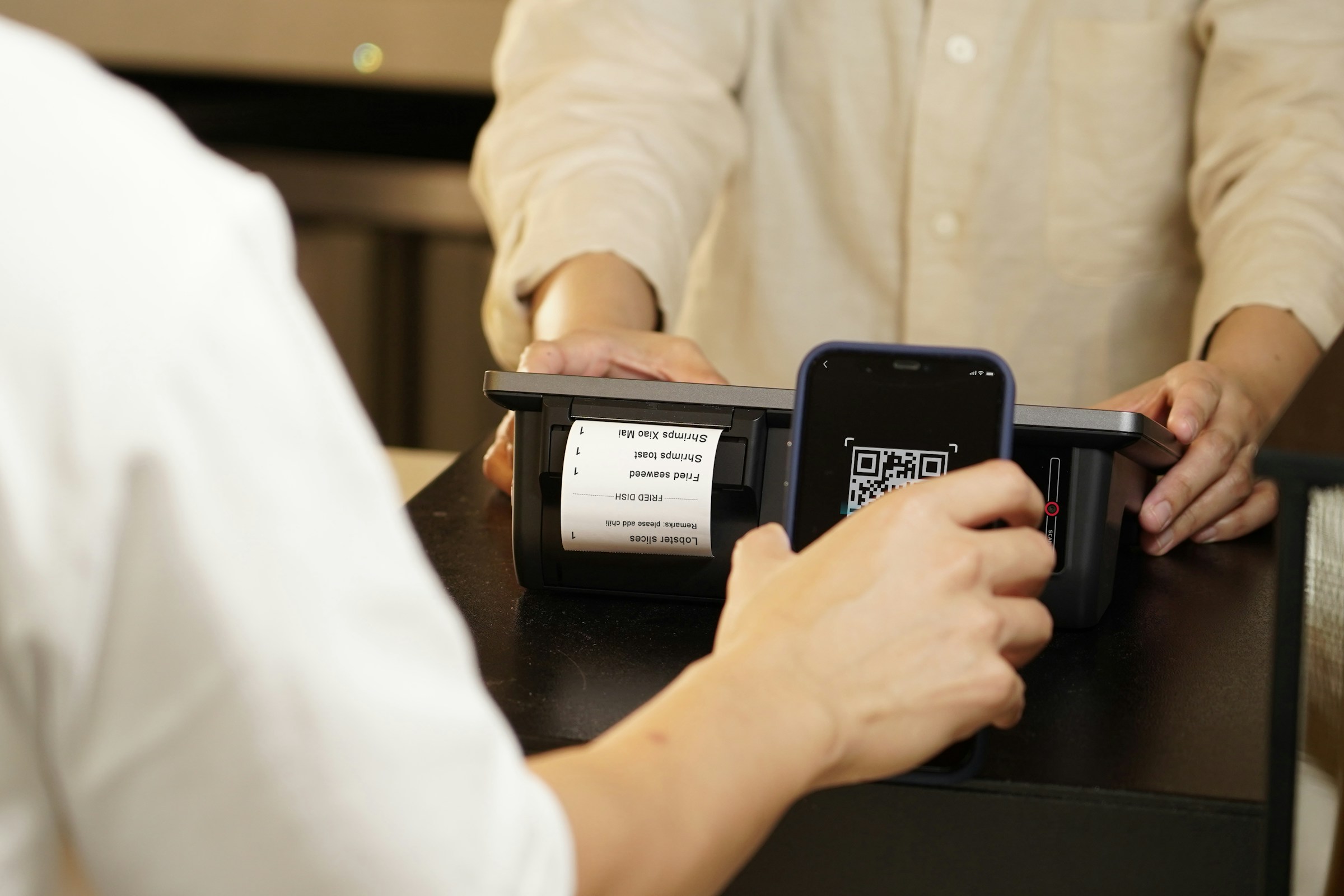
Self-checkout and self-ordering systems are becoming important because they do not try to replace the bakery team. They remove unnecessary pressure from the moments when the team is overloaded. In a bakery, many transactions are simple: one coffee, two pretzels, a sandwich, a pastry, a standard breakfast bundle, or a repeat order. When these simple orders move to a self-service screen, the counter becomes freer for consultation, fresh product questions, special requests, and human service.
That is why self-checkout bakery waiting times are more than a technology keyword. It describes a practical question for modern bakery owners: how can a branch serve more customers without making employees run faster every morning?
The psychology of waiting: why customers leave before they buy
Waiting time is not only measured by the clock. It is measured by emotion. Five minutes can feel acceptable when the queue is moving clearly. Two minutes can feel frustrating when nobody understands what is happening. Bakery customers are especially sensitive to this because many visits are routine, time-limited, and low-friction by expectation. People stop for bread before work, buy snacks during school breaks, or pick up lunch between appointments. They are not planning a long shopping journey.
The main psychological problem is uncertainty. A customer wants to know: How long will this take? Is this line for coffee, bread, cake orders, or all of them? Will someone in front need a complex order? Will I still catch my train? When the answers are unclear, abandonment becomes more likely.
There is also the issue of fairness. In traditional counter service, queues become stressful when one employee takes a long cake order while another customer only wants one baguette. The person with the simple purchase feels blocked by a transaction that has nothing to do with them. This is where self-checkout changes the perception of the store. Even if the bakery is busy, customers see options. They can choose the kiosk for a simple order, the counter for advice, or click-and-collect for pre-planned purchases.
The result is not only shorter waiting time. It is a calmer waiting experience. Customers tolerate busy stores better when they feel the system is designed intelligently.
Why bakeries are different from supermarkets and quick-service restaurants
Self-service in a bakery cannot simply copy supermarket self-checkout. A bakery has different operational details. Products may be unpackaged. Names can vary by region. Morning availability changes quickly. Some goods are sold by piece, some by weight, some by assortment, and some as part of a breakfast or coffee bundle. Freshness, allergens, and product substitution matter.
A generic retail kiosk may process payment, but it may not understand bakery logic. For example, a branch may need to connect the order screen with POS data, inventory, production forecasts, return quantities, product categories, and branch-level availability. A multi-location bakery also needs consistent master data, because a product name, price, allergen declaration, and promotion should not be manually rebuilt in every branch.
This is where industry-specific systems become relevant. General retail and hospitality platforms such as Square, Lightspeed, Shopify POS, Oracle MICROS, or TCPOS can be strong in broad retail or restaurant environments. But bakeries often need a more specialized workflow from production to sales. HS-Soft positions itself in this bakery-specific space, connecting products such as CashAssist, WaWiAssist, RezeptAssist, SmartScale, and SmartPicking into one operational ecosystem for bakery businesses. For owners who want an overview of that connected approach, the bakery software and POS ecosystem from HS-Soft shows how sales, inventory, recipes, goods distribution, and branch processes can work together.
The important point is that self-checkout should not become another isolated screen. It should be part of the bakery’s daily operating system.
Peak hour management: offloading simple transactions to kiosks
Most bakery queues are not evenly distributed across the day. They spike. A branch can be quiet at 10:45 and overwhelmed at 11:05. The same team that seemed perfectly staffed fifteen minutes earlier can suddenly face twenty customers, two coffee orders, one complaint, one pre-order pickup, and a delivery question.
Traditional staff planning tries to solve this with more people. That helps, but it is not always realistic. Labor costs are rising, skilled bakery retail staff are hard to recruit, and regulations around working time, Sunday work, night shifts, breaks, and collective agreements must be handled carefully. In Germany, bakery operators also need clean DSGVO processes when customer data, loyalty accounts, online orders, or employee access rights are involved. In Switzerland, L-GAV can matter for hospitality-related employment structures, especially when bakery cafés combine retail and gastronomy-style service.
Self-checkout gives managers another lever. Instead of only adding staff, the bakery can redesign demand. Simple orders are moved away from the staffed counter. The team stays focused on high-value service: product advice, fresh slicing, allergy questions, complaints, custom cakes, catering, and customer relationships.
A practical queue reduction retail self-service strategy starts by identifying which transactions are safe to automate. In a bakery, strong candidates often include packaged drinks, standard coffee items, sandwiches, common bread products, breakfast bundles, and repeat purchases. More complex orders can stay at the counter.
The goal is not to force every customer to use a machine. The goal is to give the queue an escape route.
Mobile ordering and branch processes should support the same goal.
Queue reduction is not only about front-of-house kiosks. It is also about preventing the POS from becoming the bottleneck for internal tasks. In many bakeries, staff use quiet moments at the till to enter branch orders, returns, stock movements, or other operational information. But during peak times, this creates a conflict: the same terminal is needed for customers and internal processes.
That is why mobile branch ordering can support the same queue-reduction logic. If employees can capture orders or returns away from the fixed cash register, the checkout point stays available for sales. HS-Soft’s mobile ordering system for bakery branches reflects this principle: branch ordering and returns can be handled independently of the cash desk, so customer waiting times are not increased by back-office tasks.
This distinction matters. A bakery can install a kiosk and still have queues if employees are blocking the POS with internal workflows, correcting inventory data manually, or searching for product information in separate systems. The better approach is to remove friction from both sides: customers get faster self-service for simple purchases, and staff get mobile tools for operational tasks that should not occupy the main checkout lane.
Staff stress: the hidden cost of long queues
Customers see the waiting time. Managers see revenue. Employees feel the pressure in real time.
A long queue changes the emotional climate of a bakery. Staff speak faster, move faster, and have less time to confirm details. New employees become nervous. Experienced employees become exhausted. Managers may interpret the problem as a motivation issue, but often the real issue is system design. The team is being asked to handle too many different task types at the same bottleneck.
Self-checkout reduces this pressure by separating simple from complex work. When a customer can independently select standard products and pay, the employee does not have to spend time on repetitive transactions. Instead, they can focus on moments where human service actually matters.
This has a direct personnel management benefit. A bakery that reduces peak stress can make shifts more sustainable. It may also reduce the need for constant firefighting in staff planning. If a kiosk absorbs 15–25% of simple peak transactions, the team may not need to add another employee for every rush period. The exact result depends on branch layout, product mix, customer adoption, and payment flow, but the operational principle is clear: automation is most valuable when it protects staff from repetitive overload.
For bakery owners, this is also a retention issue. Employees who spend every morning apologizing for queues are more likely to burn out. Employees who have tools that make service smoother are more likely to deliver the friendly, confident experience that customers remember.
Order accuracy and allergen confidence
Speed is only useful when accuracy stays high. In bakeries, wrong orders can be more serious than a simple inconvenience. A mistaken product can affect allergens, dietary preferences, pricing, production planning, and customer trust.
Self-ordering improves accuracy because the customer becomes part of the order-entry process. They see the product name, image, price, quantity, and options before payment. This reduces misunderstandings caused by noise, accents, rushed speech, or similar product names. For example, if two pastries look similar but contain different fillings, a screen can help the customer confirm the exact item.
However, accuracy depends on data quality. A kiosk is only as reliable as the product information behind it. This is why recipe management, allergen calculation, price maintenance, and POS synchronization matter. If the bakery updates allergens in one system but the kiosk uses outdated data, self-service becomes risky. If prices change in the POS but not in the self-ordering interface, staff will have to explain the difference at pickup.
A connected system reduces this risk. When recipe data, allergen information, product master data, POS pricing, and inventory logic are maintained centrally, self-checkout becomes a controlled extension of the bakery operation rather than a separate sales channel.
A bakery case study self-ordering scenario
Imagine a bakery café with three branches in a German city. The busiest location sits near a train station. Between 7:15 and 8:45, the branch regularly serves office workers, students, and commuters. The team has three employees: one focused on bread and pastries, one on coffee, and one alternating between payment, pickup, and restocking.
Before self-checkout, the average visible queue during the morning rush is 11 customers. Average transaction time at the counter is 75 seconds for simple purchases and up to three minutes for mixed coffee and food orders. The branch loses customers when the queue reaches the entrance. Staff also delay internal return entries because the till is constantly occupied.
Now the bakery introduces two self-ordering kiosks and a mobile ordering device for branch processes. The kiosks handle standard breakfast bundles, coffee, sandwiches, bottled drinks, and common baked goods. The counter remains available for customers who need advice, cash payment, custom orders, allergy questions, or personal service.
After a learning period, 30% of morning customers choose self-ordering. Not all transactions become faster, but the queue becomes more balanced. The counter queue drops from 11 visible customers to 6–7 during the same peak window. Simple kiosk orders average 45–55 seconds of customer input, while employees prepare items in parallel. The average staffed-counter transaction mix becomes more complex, but the team feels less rushed because repetitive payment-only interactions are reduced.
This bakery case study self-ordering scenario is hypothetical, but it reflects the type of measurement bakery owners can use before and after implementation. The point is not to claim that every bakery will get the same result. The point is to define the right operational baseline.
Measuring success: average transaction time reduction
A self-checkout project should not be judged by the number of screens installed. It should be judged by measurable improvements. The most useful metrics are practical and branch-level.
First, measure average transaction time. Separate simple orders from complex orders, because a kiosk should not be expected to shorten every type of purchase equally. A realistic target might be a 15–30% reduction in average handling time for simple, repeatable purchases.
Second, measure queue length during peak windows. Do not only measure daily averages, because daily averages hide the crisis. A bakery needs data for the real pressure points: 7:00–9:00, lunch, school breaks, Sunday morning, and seasonal peaks.
Third, measure abandonment indicators. This can be difficult, but staff observation, camera-based counting where legally appropriate, and POS comparisons can show whether fewer customers leave during rush periods. Any use of video or customer data must be checked against DSGVO requirements in Germany and local privacy rules in other markets.
Fourth, measure staff workload. Ask employees whether the rush feels more manageable, whether order errors have decreased, and whether they have more time for product quality and customer interaction. Staff feedback is not “soft” data. It shows whether the system works in real life.
Fifth, measure product availability and waste. If self-ordering connects with inventory and production data, managers can better understand which products sell fastest and which items create bottlenecks. Over time, this can improve baking schedules, picking, and replenishment.
Common mistakes when introducing self-checkout
The first mistake is treating self-checkout as a standalone gadget. A kiosk that is not connected to POS, inventory, product data, or staff workflows can create more work than it removes.
The second mistake is placing kiosks where customers do not naturally see them. Self-service must be obvious before the customer commits to the queue. Clear signage, intuitive screen design, and staff guidance during the first weeks are essential.
The third mistake is automating too much too quickly. Bakeries should start with simple, high-volume products. Once customers trust the system, the range can expand.
The fourth mistake is ignoring older or less technical customers. The best bakery self-checkout strategy keeps human service available. It does not punish customers who prefer the counter.
The fifth mistake is failing to train employees. Staff need to understand how the system helps them, not fear that it replaces them. When employees see that kiosks reduce repetitive pressure and protect service quality, adoption becomes easier.
Why does self-checkout support better personnel planning
Although self-checkout is usually discussed as a sales technology, it also affects personnel management. If managers know that a certain percentage of simple orders can be handled through self-service, they can schedule staff more intelligently. Instead of adding people only to operate tills, they can assign employees to preparation, pickup, customer advice, restocking, or production coordination.
This is especially important for bakeries with multiple branches. A single busy store may survive with informal workarounds. A chain with ten, twenty, or fifty branches needs repeatable systems. Staff planning, POS workflows, recipe data, inventory, and goods distribution must support the same operating model.
For bakeries in Germany, Austria, and Switzerland, this also connects with compliance. Working time, Sunday trading, break rules, payroll documentation, and privacy obligations all shape how technology should be introduced. A self-checkout system that reduces pressure during rush periods can support a more stable staffing model, but it should be implemented alongside clear employee roles and compliant data processes.
The future bakery branch: faster, calmer, more connected
The bakery of the future is not a store without people. It is a store where people are not trapped behind inefficient processes. Customers who want speed can order quickly. Customers who want advice can speak to a trained employee. Staff can focus on service and quality instead of repeating the same payment steps hundreds of times. Managers can see what happens across branches instead of relying on paper notes, manual counts, and disconnected reports.
Self-checkout is one part of that future. Mobile branch ordering, digital goods distribution, recipe management, smart weighing, allergen control, and cloud-based inventory are the surrounding pieces. Together, they create a bakery operation that is faster at the front, clearer in the back, and easier to manage across locations.
For HS-Soft, the strategic advantage is not simply offering another checkout screen. It is the bakery-specific connection between POS, ordering, inventory, recipes, production, and branch workflows. That makes the technology more relevant for bakery owners who do not want generic retail software adapted awkwardly to their business. They want systems that understand bread shelves, morning peaks, returns, production lists, allergens, branch transfers, and the reality of serving customers when the line reaches the door.
The queue crisis will not disappear by telling staff to work faster. It will be solved by designing better flows. Self-checkout gives bakeries a practical way to offload simple transactions, reduce visible waiting, improve order clarity, and protect employees from unnecessary stress. When connected with the wider bakery software environment, it becomes more than a convenience feature. It becomes a measurable tool for better service, better planning, and stronger customer loyalty.