 logo
logo
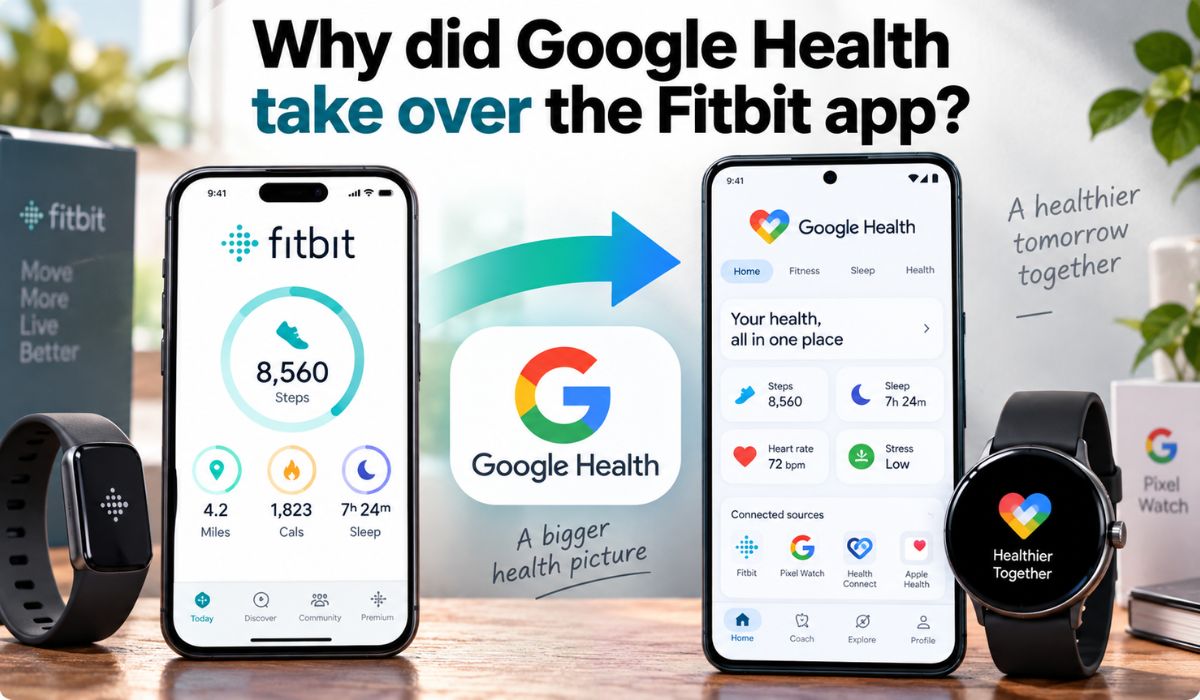
The moment you logged into the Fitbit app in 2026 and were greeted with Google Health, it felt like a takeover of Fitbit by Google. However, this was actually years ago.
Google completed its purchase of Fitbit back in January 2021. The only thing that changed was the app in May 2026. The Fitbit app was renamed the Google Health app, given new branding and additional health-data integrations, and capped off with the Google AI features.
So it wasn’t yet another purchase. Fitbit was already a Google holding. The 2026 transition was more about leveraging the foundation of what Fitbit had created and making it into a larger health app for the entire Google ecosystem.
Why Did Google Turn the Fitbit App Into Google Health?
The main reason is pretty simple. Fitbit was largely a fitness tracker and smartwatch, sleep and activity data, and wellness data company. That was what Google was not looking for.
Google Health is an attempt by the company to centralize a person’s health-related information. That can include information from connected devices, medical records, Health Connect, Apple Health, and Fitbit devices and Pixel Watches.
Consider the typical operation of health apps. Your watch can have your heart rate and sleep. You’ve got another App with your weight. The results of tests are stored on your doctor’s portal and perhaps another service keeps track of workouts. It quickly becomes rather a mess.
Google’s vision is to make Google Health more of a hub where all of that stuff happens, as opposed to it being a Fitbit-centric app.
This doesn’t imply that Fitbit’s old capabilities went away, however. The app still has all sorts of features such as activity, sleep data, and fitness. Google has essentially developed a larger health offering around them.
Google Also Wanted Fitbit to Fit Better With Its Other Health Products
This change also makes more sense when you look at how many health products Google already had.
There was Fitbit. There was Google Fit. Pixel Watch used Fitbit features. Android had Health Connect for sharing health information between apps. These things worked together in different ways, but they still felt like separate pieces.
Honestly, that could get a little confusing.
By turning Fitbit into Google Health, Google gets one main consumer health app that can connect more of these pieces. When Google announced the change, it also said it planned to bring more of its health and fitness products together and invite Google Fit users to move their data into Google Health.
So the name change wasn’t just about replacing the Fitbit logo with a Google one. It was also about cleaning up Google’s health setup and making one app the main place people go.
AI Was Another Big Part of the Change
 AI is another reason the Fitbit app probably couldn’t just stay exactly as it was.
Google Health includes the Google Health Coach, which is built with Gemini. The idea is that the app can use the health and fitness information you choose to connect and give more personalized workout and wellness guidance.
For example, instead of only showing that you slept a certain number of hours or completed a workout, Google wants the app to help make more sense of that information and suggest what you might do next.
That is a much bigger job than the old Fitbit app was originally designed for.
Still, it is worth keeping expectations realistic. An AI health coach isn’t your doctor, and general wellness advice isn’t the same thing as medical diagnosis or treatment. Google Health is expanding into more health information, but that doesn’t turn every feature into medical care.
What Changed for Existing Fitbit Users?
For most people, the change was less dramatic than the new name made it look.
Google started rolling the Google Health app out on May 19, 2026. Existing Fitbit users didn’t have to go find and install a completely separate app. The existing Fitbit app was updated into Google Health.
Fitbit and Pixel Watch devices also continued working with the new app. Google specifically said existing Fitbit and Pixel watches would still pair with Google Health.
Here is the basic difference:
| Before May 2026 | After May 2026 |
|---|---|
| Fitbit app | Google Health app |
| Mostly Fitbit-focused experience | Broader health and wellness hub |
| Fitbit account or Google Account during migration period | Google Account required |
| Fitbit fitness, sleep, and health tracking | Fitbit features plus wider data connections and AI tools |
The interface changed too. Google introduced four main areas called Today, Fitness, Sleep, and Health, which made the app feel more like a general health dashboard instead of only a Fitbit companion app.
So if you already owned a Fitbit, your tracker didn’t suddenly become useless. The app around it changed.
Why Did Google Require Fitbit Users to Move to Google Accounts?
This part started before the Google Health rebrand, but by 2026 Google finished the transition.
After May 19, 2026, people could no longer continue accessing Fitbit using an old Fitbit account. To keep using the service, they needed to move that account to a Google Account. Google said users could keep the historical Fitbit data they chose to migrate.
From Google’s side, the reason is that one Google Account can now handle the app, connected devices, and privacy settings instead of maintaining a separate Fitbit login system.
For users, it means one less account, although I can understand why longtime Fitbit users may not love being forced to move. If you had used Fitbit for years before Google bought it, the old account probably felt like part of the product.
Health data is also the obvious concern here. Google says Fitbit and Google Health wellness data is not used for Google Ads, and it has kept that commitment after the move to Google Health.
Users can also manage what data they connect, share, or delete through Google Health and their Google Account settings.
Is Fitbit Going Away Completely?
Not exactly. The Fitbit app name is gone, because that app became Google Health. But that doesn’t mean every part of Fitbit disappeared at the same time.
Fitbit devices still work with Google Health, and Fitbit’s fitness and wellness technology still sits underneath a lot of the experience. Google has also continued talking about Fitbit products and Fitbit-based health features rather than treating the brand as if it never existed.
So it helps to separate two things.
The Fitbit app has been replaced by Google Health. Fitbit hardware and Fitbit’s health-tracking technology have not simply stopped working.
Could Google eventually change the Fitbit brand even more? Sure, companies change branding all the time. But based on what Google has actually announced, it would be wrong to say Fitbit as a whole disappeared just because the app changed names.
Final Thoughts
So, why did Google Health take over the Fitbit app?
Google had already owned Fitbit since 2021. In 2026, it turned the Fitbit app into Google Health because it wanted something bigger than a standalone fitness-tracker app. The new app brings Fitbit and Pixel data together with other health sources, uses one Google Account, and adds Gemini-powered coaching.
For existing Fitbit users, the biggest visible changes were the new name, redesigned app, and Google Account requirement. Your Fitbit device itself didn’t suddenly stop working.
And honestly, that is probably the easiest way to think about the whole change: Fitbit became the foundation, while Google Health became the bigger app built around it.
Do you prefer the old Fitbit app, or does the new Google Health setup make more sense to you?